
- Board Certified Criminal Trial Attorney
- 12 Years an Assistant Public Defender in Miami
- Licensed to Conduct Breath Alcohol Testing
- Open 24 Hours
A Miami DUI Attorney Who Learned the Work Inside the Public Defender's Office
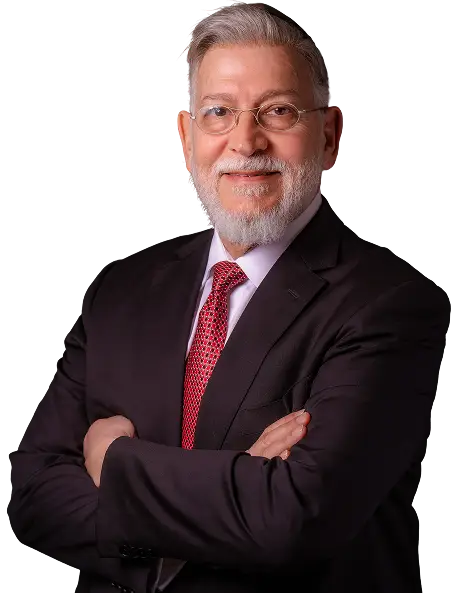
Board Certified criminal trial attorney Robert Malove of The Law Offices of Robert David Malove spent 12 years as an assistant public defender in Miami and finished that run as the office's training attorney for DUI defense. Fewer than 400 of the Florida Bar's more than 100,000 active members hold Board Certification in criminal trial law; Robert Malove is one of them.
"I cut my teeth on being an assistant public defender in Miami ... probably one of the busiest courthouses in the country, certainly in the state of Florida, but in the country as well." Robert Malove, recorded interview
The DUI specialty began in Miami too. While at the Public Defender's Office, Robert used his standing as a state employee to enroll in the Miami-Dade police academy coursework, where he earned a certificate in administering field sobriety exercises and a Florida Department of Law Enforcement license to conduct breath testing on the Intoxilyzer, the machine family that still produces the number in a Miami DUI file. On his last stretch at the office, he taught the next generation. In his words, "when I was at the Public Defender's Office before I left in Miami, I was the training attorney for the young attorneys in teaching them how to defend against DUI offenses, amongst other things."
Half a dozen of the attorneys he supervised in that role went on to become judges. Decades later, Robert walks into Miami courtrooms he trained people for. That is not a promise about any case. It is a measure of how long he has been doing this work in this city, and at what depth.
- 12 years an Assistant Public Defender in Miami
- Florida DUI Training Attorney, designated 1995 in Miami
- Licensed by the Florida Department of Law Enforcement to conduct breath alcohol testing
- Metro-Dade Police Academy Field Sobriety Testing Course
- Master's in Forensic Science, The George Washington University
- Founding member, National College for DUI Defense
If you are comparing Miami DUI lawyers this week, use Robert's own yardstick for the decision: background, education, and experience. Put two questions to every DUI attorney in Miami on your list. Where did you learn this work, and have you ever held a breath-testing license? Then ask how much of that learning happened here.
The 10-Day Clock Starts at the Arrest, Not at Court
The traffic citation issued at a Miami DUI arrest is three documents in one: the charge, the notice that your license is suspended, and a temporary permit good for 10 days. Florida sets both the permit and the deadline in section 322.2615 of the Florida Statutes. By the 10th day, one of two filings has to reach the Florida Department of Highway Safety and Motor Vehicles (FLHSMV): a demand for a formal review hearing, or a waiver that trades the hearing for a hardship license without the hard no-driving period.
The suspension math depends on what happened at the stop. A refusal carries a 12-month administrative suspension with no driving of any kind for the first 90 days. A breath test over the limit carries a 6-month suspension with 30 hard days. For first offenders who depend on driving, Robert's practice is to recommend the waiver, so the client never sits out those hard days at all. The hardship permit reaches work driving, necessary on-the-job driving, school, church, and medical needs, plus a catch-all for maintaining livelihood.
Clients arrive with the same worries in the same order. In Robert's words, "the first thing that people want to know is, can I drive? And will this remain on my record?" The first 10 days settle the driving question, so that is where the work begins when the firm is hired inside the window:
- Calendar the FLHSMV deadline the day the file opens, so the license decision gets made instead of defaulted
- Enroll the client in DUI school, because the hardship application requires it; enrollment is not an admission of guilt, and nothing that happens at the FLHSMV changes the criminal case
- File a notice of appearance and reach the State Attorney's Office while the filing decision is still open
- Preserve what the paperwork leaves out, from the stop video to nearby cameras that recorded the scene
The criminal case and the license case then run on separate tracks. Each one can be won or lost on its own, which is why a strong position in one is never treated as an answer to the other.
Miami Breathalyzer Defense Begins With a Lawyer Who Held the License
DUI defense in Miami starts with what the state must prove. Florida charges DUI rather than DWI, and there are two routes to a conviction: impairment of normal faculties, or a breath, blood, or urine result over the .08 limit set by section 316.193 of the Florida Statutes. For a standard first conviction, that statute sets a fine of $500 to $1,000 and up to 6 months in jail; a result of .15 or higher, or a minor in the vehicle, lifts the jail ceiling to 9 months.
A plea brings mandatory minimums that outlive the courtroom: at least 6 months of probation, 50 hours of community service, DUI school, 10 days of vehicle immobilization, a license suspension, and an adjudication of guilt that Florida law does not allow to be sealed or expunged. Sentencing practice varies around the state, and Robert's observation across four decades is that first offenders mostly stay out of jail, but no lawyer can promise what a particular courtroom will do. What can be controlled is how hard the state's evidence gets tested before anyone talks about pleading.
The number in the file comes out of a machine, and Robert holds a credential most defense lawyers never pursue. In his words, "Not many criminal defense attorneys that I know of ever had the certificate to administer breath tests." In practice, that means reading the instrument's calibration and service records against the department's own standards instead of taking the printout at face value.
The state's story also has to survive its own cameras. Dash and body cameras record what the reports summarize, and the two do not always match; Robert has pulled recordings where an officer's own microphone told a different story than the arrest paperwork. His rule for every file: "You really just can't leave it to chance. You gotta look everything over."
Back on Track Is Miami-Dade's One DUI Diversion Program
Miami-Dade DUI cases are heard inside the Eleventh Judicial Circuit at the Richard E. Gerstein Justice Building, 1351 NW 12th Street in Miami. Misdemeanor DUI cases run through county court there, and felony DUI cases are heard in the same building.
For first-time defendants, the county offers a single path around a conviction. Miami-Dade and Miami, in Robert's words, "have one diversion program." The State Attorney's Office calls it Back on Track, and prosecutors decide which first-time DUI defendants qualify. A completed program resolves the charge to reckless driving with a withhold of adjudication, and the client can then apply to have the record sealed. The entrance has real limits: an accident closes the door, a second offense closes it, and a high breath result can close it too.
Diversion is county law, not state law. Each jurisdiction controls its own program, some Florida counties offer none, and what happened to a friend after a DUI arrest somewhere else says nothing about how a Miami case will run. Board Certified criminal trial attorney Robert Malove of The Law Offices of Robert David Malove weighs Back on Track eligibility before advising any first-time client whether to fight a Miami DUI charge, because the decision to litigate and the decision to keep diversion open can pull in opposite directions.
The Firm's Miami Office Is in the Wells Fargo Center, Open 24 Hours
Wells Fargo Center
333 SE 2nd Ave, Ste 2000, Office 2051
Miami, FL 33131
Open 24 Hours
(954) 861-0384The office is in the Wells Fargo Center on SE 2nd Avenue in downtown Miami. Wherever in the city your night ended, if you searched for a DUI lawyer near me, this is the address, and the phone is answered around the clock.
Frequently Asked Questions
How much does a DUI lawyer in Miami cost?
The fee follows the file. Until a Miami-Dade County DUI lawyer has read the arrest paperwork, watched the video, and seen whether the case involves a refusal, an accident, or a prior, any number would be a guess. The math worth doing first is the other one. A conviction raises insurance a lot, if the carrier keeps you at all, and it carries an adjudication of guilt that cannot be sealed or expunged. Spread over the years a conviction lasts, paying for the defense is often the smaller number.
Does Miami-Dade have a DUI diversion program?
Yes, one. Back on Track is the DUI diversion program run through the Miami-Dade State Attorney's Office, and prosecutors decide which first-time defendants qualify. A completed program resolves the charge to reckless driving with a withhold of adjudication, and the client can then apply to have the record sealed. An accident, a second offense, or a high breath result can keep you out, which is why eligibility gets evaluated before any other decision is made in the case.
Where are Miami DUI cases heard?
At the Richard E. Gerstein Justice Building, 1351 NW 12th Street in Miami, the criminal courthouse of the Eleventh Judicial Circuit. Misdemeanor DUI cases run through county court there, and felony DUI cases are heard in the same building. Robert cut his teeth as an assistant public defender in Miami, in what he calls probably one of the busiest courthouses in the country.
Can you refuse the breath test in Miami?
Refusing is legal, and it has a price set by statute. A first refusal suspends the license for 12 months, with no driving at all for the first 90 days, a longer and harder suspension than the one for testing over the limit. A second refusal after a prior refusal suspension is a separate first-degree misdemeanor under section 316.1939. Whether refusing helped or hurt in your particular stop is a question the video answers, not a rule of thumb.
My husband was arrested for DUI in Miami last night. What happens next?
Start with the traffic citation, which is also the notice of license suspension and a temporary permit that runs out 10 days after the arrest. Write down every date on the paperwork, including the arraignment. Let no decision about fighting the case be made before Back on Track eligibility has been evaluated, because that door is worth keeping open for a qualifying first offense. The Miami office answers 24 hours at (954) 861-0384.

Talk to a Miami DUI Lawyer Before Your 10 Days Run Out
Robert Malove is a Board Certified criminal trial attorney, one of fewer than 400 in the state out of more than 100,000 active members of the Florida Bar. The distinction requires at least 25 contested cases and a minimum of 20 jury trials every 5 years.
If you are under investigation, have been arrested for DUI, are facing a second charge, or have a conviction on your record and want an expert criminal defense attorney on your side, fill out this form or call us now at (954) 861-0384.
The Law Offices of Robert David Malove serves clients across Florida, with DUI defense teams in nine offices: Fort Lauderdale, Miami, Orlando, West Palm Beach, Fort Myers, Fort Pierce, Gainesville, Key West, and Sarasota.