

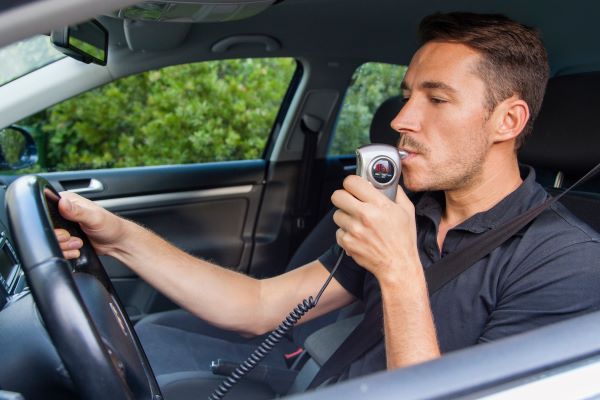
Ignition Interlock Devices in Florida
 Robert Malove
Overview
We interviewed subject matter expert Robert Malove, a Board Certified criminal trial attorney (one of fewer than 400 in Florida) and founding member of the National College for DUI Defense, of The Law Offices of Robert David Malove, to give you the best possible answers on ignition interlock devices in Florida. This article covers who must install one, when the requirement begins, how long each conviction tier runs, and who pays.A Note Before You Read
This article answers the question the way Florida law answers it for most people. Your case has its own facts, and small details change outcomes. Nothing here is legal advice for your specific situation. If you want an answer about your case, call The Law Offices of Robert David Malove at (954) 861-0384. There is no pressure to hire anyone; you will simply get a straight answer.
Your DUI case is moving toward a resolution this week. The plea terms include a line about a device wired to your ignition, the paperwork from the Florida Department of Highway Safety and Motor Vehicles (FLHSMV) mentions a P restriction, and the provider you called quoted an installation fee plus a monthly monitoring charge.
If that is you, this article explains the ignition interlock device in Florida: who must install one, when the requirement begins, how long it lasts, and who pays. The device is mandatory from a second conviction forward, mandatory on a first conviction when your breath or blood alcohol level was .15 or higher or a minor was in the car, and a judgment call on any other first conviction. Every cost is yours.
The sections below cover the conviction tiers, the first-conviction rules, the day the clock starts, the costs, how the device behaves on the road, and when to bring in an attorney. The device rules trace to the Florida Statutes and FLHSMV’s program pages. The skepticism about breath machines comes from a recorded interview with Robert Malove, a Board Certified criminal trial attorney, founding member of the National College for DUI Defense, and a lawyer licensed to conduct breath alcohol testing himself.
Florida requires an ignition interlock device for at least 1 year after a second DUI conviction, at least 2 years after a third, and at least 5 years after a fourth. A first conviction carries a mandatory 6 continuous months only when your breath or blood alcohol level (BAL) was .15 or higher or a passenger was under 18; otherwise the judge decides. The driver pays every cost.
The full tier list:
- First conviction, no aggravator. No automatic device; the court may order one for at least 6 continuous months (Sections 316.193(2)(c) and 316.1937, Florida Statutes).
- First conviction with a BAL of .15 or higher, or a passenger under 18. Mandatory, not less than 6 continuous months (Section 316.193(4)(c), Florida Statutes).
- Second conviction. Mandatory, at least 1 year; not less than 2 continuous years with the .15 or minor aggravator (Section 316.193(2)(a)3. and (4)(c), Florida Statutes).
- Third conviction. Mandatory, not less than 2 years (Section 316.193(2)(b), Florida Statutes).
- Fourth or subsequent conviction. At least 5 years, as a condition of the hardship license (Section 322.2715(3)(f), Florida Statutes).
- Every tier. The device goes on all vehicles you own or routinely operate, once you qualify for a permanent or restricted license.
Board Certified criminal trial attorney Robert Malove of The Law Offices of Robert David Malove reviews these tiers with every Florida DUI client before a plea is entered, because the interlock term attaches to the conviction the plea creates. The tiers are verified against the current text of Section 316.193, Florida Statutes.
Key Takeaways
- Second conviction and up is mandatory. At least 1 year after a second DUI, at least 2 years after a third, at least 5 years after a fourth.
- The .15 trigger. A first conviction carries a mandatory 6 continuous months when your BAL was .15 or higher or a passenger was under 18.
- The clock starts at the P restriction. Time counts only after FLHSMV issues your license with the P restriction, never from installation alone.
- You pay everything. The statute puts the device at “the convicted person’s sole expense,” and the state publishes no fixed price.
- The device tests at .025. A reading above .025 stops the engine from starting, and a missed or failed rolling retest counts as a violation.
Florida Sets Interlock Terms by Conviction Count
Section 316.193 of the Florida Statutes ties the interlock requirement to the number of DUI convictions on your record, and from the second conviction forward the device is mandatory. For a second conviction, the statute orders “mandatory placement for a period of at least 1 year, at the convicted person’s sole expense.” For a third, the period is “not less than 2 years.” A fourth or subsequent conviction is a third-degree felony, and Section 322.2715 sets an interlock of at least 5 years as a condition of the hardship license that follows.
The device goes on “all vehicles that are individually or jointly leased or owned and routinely operated by the convicted person,” starting “when the convicted person qualifies for a permanent or restricted license.” Only the third-conviction felony analysis asks whether a prior conviction fell within 10 years; the interlock tiers count convictions across your lifetime.
A First Conviction Leaves the Interlock to the Judge, With One Mandatory Trigger
A standard first DUI conviction carries no automatic interlock; the judge may order one for at least 6 continuous months. The mandate arrives when your blood or breath alcohol level was .15 or higher, or a person under 18 was in the vehicle at the time of the offense.
In those aggravated cases, Section 316.193(4)(c) says the court “shall order the mandatory placement” of the device “for not less than 6 continuous months for the first offense and for not less than 2 continuous years for a second offense.” On the discretionary side, Section 316.1937 lets a court order the device on any DUI conviction, set so “the vehicle will not start if the operator’s blood alcohol level is in excess of 0.025 percent.”
A .14 and a .15 sit one hundredth apart, and one of them makes the interlock mandatory, which is why the breath test’s administration and reliability get examined so closely in a first-offense case.
The Interlock Clock Starts When the P Restriction Reaches Your License
Time on the device counts only after FLHSMV issues your license with a P restriction; installing the interlock without reinstating earns you nothing. FLHSMV states that the required period begins on the day the P restriction is issued: after installation, visit a driver license service center or tax collector office to have the restriction added, or the time does not count. The program details live on the FLHSMV Ignition Interlock Program page.
In our interview, Robert Malove described a Florida DUI as running on two separate tracks. One is the criminal case. The other is administrative, and it exists because Florida treats driving as a privilege, a status the license itself spells out.
The interlock rides the administrative track. Under Section 322.2715(1), the Department must require the device before issuing a permanent or restricted license to anyone in the conviction tiers, so it attaches to whichever license you get back, hardship or full. For first offenders who depend on driving, Robert described the firm’s standard move: “if they are dependent upon having to drive, and they don’t have a prior DUI offense, then we recommend that they do the waiver” of the administrative hearing, which opens a hardship permit without a hard no-driving period. The criminal court and FLHSMV each keep their own record, so read both before you assume your position; no single document tells you where you stand.
The Driver Pays Every Interlock Cost
Florida law puts installation, monitoring, and removal on you; the phrase that repeats through Section 316.193 is “at the convicted person’s sole expense,” and the state publishes no fixed price. Seven FLHSMV-approved providers, currently RoadGuard Interlock, Smart Start, Alcohol Detection Systems, LifeSafer, Intoxalock, Low Cost Interlock, and ALCOLOCK, set their own installation and monthly monitoring fees. Since September 1, 2020, FLHSMV and the vendors have offered discounts for drivers who cannot afford the device, and a court that finds you unable to pay may direct part of your DUI fine toward installation under Section 316.1937.
A DUI conviction is expensive, Robert said, and the interlock lands on top of the fine, DUI school, and probation costs. He was just as direct about why people pay it.
“The biggest disruption to anybody’s life, especially in this day and age, is mobility… that’s the biggest issue that we face early on, I think is, can I drive?” said Robert Malove.
For a driver in the mandatory tiers, the answer is yes only with the device installed.
The Device Tests You at .025 Every Time You Drive
For convictions after July 1, 2013, the interlock’s lockout threshold is a .025 blood alcohol level; any reading above it keeps the engine from starting. That sits far below the .08 limit that defines the offense, and a judge may order it lower still.
FLHSMV’s published rules fill in the daily mechanics. During a rolling retest you have up to three minutes to give a sample before the alarm sounds, enough time to pull over, and the device never shuts off a moving vehicle. Anyone who drives the car must blow to start it, family members included. One carve-out exists for work: with a valid P-restricted license and written employer permission kept in the vehicle, you may drive an employer’s vehicle for job-related purposes without a device.
A violation is specific: “any two breath test results above the mandated BAL upon initial startup of the vehicle; any refusal to submit to a required rolling retest (missed test); any rolling retest above the mandated BAL; or any evidence of equipment tampering.” Violation letters direct you to the licensed DUI program serving your county, and tampering with the device, circumventing it, or having someone else blow into it is unlawful under Section 316.1937(6). Even alcohol-based mouthwash can register; rinse with water and take the five-minute retest so the device logs the reading as latent alcohol, because skipping that retest is itself a violation.
Breath Machines Carry Service Histories, and Robert Malove Reads Them
Board Certified criminal trial attorney Robert Malove of The Law Offices of Robert David Malove is licensed by the Florida Department of Law Enforcement to conduct breath alcohol testing on Intoxilyzer instruments, a credential he says few criminal defense attorneys have held. His rule for any breath machine, the interlock included, is that the number is only as reliable as the machine producing it.
“You weren’t necessarily getting the most accurate reading,” Robert Malove said of the needle-and-card breath units used early in his career. “And people got convicted of that kind of stuff, so we really want to make sure that if someone’s going to get convicted, the evidence… supports that.”
He applies the same discipline when a breath number decides a case today: “First thing we do is we want to find out if the breath testing equipment was properly calibrated… met all of the… department’s standards, as it has been recently serviced, was taken offline.” An interlock is a breath instrument too, certified under Section 316.1938 to National Highway Traffic Safety Administration standards and recalibrated monthly by the vendor, so when a reported violation does not match what you know happened, the starting point is the device’s own calibration and service record.
What to Do the Week the Interlock Requirement Lands
Move in a set order, because the order decides whether your time counts.
- Read the court order. Confirm it states both the suspension period and the interlock term, and verify with the clerk of court that the conviction report sent to FLHSMV included the interlock requirement.
- Call an approved provider. Only the seven FLHSMV-approved vendors count. Schedule installation on every vehicle you routinely operate, and ask about the discount program.
- Reinstate with the P restriction. Take proof of installation to a driver license service center or tax collector office. The required period starts that day and not before.
- Keep the provider’s schedule. Monthly monitoring visits and every rolling retest feed the record FLHSMV sees; a missed retest counts as a violation.
The sequence is the same in every county. A Gainesville DUI lawyer handling an Alachua County case walks a client through the identical FLHSMV steps as our Fort Lauderdale office, because the interlock program runs statewide while your criminal case stays local.
When to Bring in a Florida DUI Attorney
The time to involve an attorney is before the plea, because the interlock tier attaches to the conviction the plea creates, and a Florida DUI conviction does not come off. A DUI adjudication cannot be expunged or sealed, Robert noted; it stays on your record for life. A second conviction ten years from now still triggers a mandatory 1-year interlock, so the case in front of you sets the floor for every case after it.
Board Certified criminal trial attorney Robert Malove of The Law Offices of Robert David Malove is one of fewer than 400 lawyers holding that certification among the Florida Bar’s more than 100,000 active members, and his Fort Lauderdale DUI lawyer team works both tracks from the first week: the FLHSMV deadline and waiver decision, and the evidence on the criminal side.
The firm is also plain about what a device cannot fix. Robert’s stated aim is to leave each client in a better position than the one the firm found them in, and when substance abuse is part of the picture, that means encouraging treatment. If the interlock keeps reading alcohol, the machine is reporting a problem the courtroom cannot solve, and Robert says so directly.
Frequently Asked Questions
Who must install an ignition interlock device in Florida?
Anyone convicted of a second or subsequent DUI, and any first-time offender whose blood or breath alcohol level was .15 or higher or who had a passenger under 18 in the vehicle. The mandatory periods run at least 1 year for a second conviction, 2 continuous years with the .15 or minor aggravator, at least 2 years for a third, and at least 5 years for a fourth as a hardship-license condition. On any other first conviction, the judge may order the device but is not required to.
How much does an ignition interlock device cost in Florida?
Florida sets no price. Section 316.193 places the device “at the convicted person’s sole expense,” and the seven FLHSMV-approved providers set their own installation and monthly monitoring fees. Vendor discount programs have run since September 1, 2020, and a court that finds you unable to pay may direct part of your DUI fine toward installation.
Does the interlock period start when the device is installed?
No. The required period begins the day FLHSMV adds the P restriction to your license, which happens only after you take proof of installation to a driver license service center or tax collector office and reinstate. A device on a suspended license earns no credit.
Can you drive an employer’s vehicle without an interlock?
Yes, within limits. With a valid P-restricted license and written permission from your employer kept in the vehicle, you may drive the employer’s vehicle for job-related purposes without a device. Your own vehicles, and any vehicle you routinely operate, still require the interlock.
What happens if the interlock detects alcohol?
A reading above the .025 threshold stops the engine from starting. If the source could be mouth alcohol, such as mouthwash, rinse with water and take the five-minute retest so the device records the first result as latent. Two high readings at startup, a missed or failed rolling retest, or any evidence of tampering counts as a violation, and violation letters direct you to the licensed DUI program serving your county.
Talk to a Florida DUI Lawyer Before the Interlock Term Is Set
Robert Malove is a Board Certified criminal trial attorney, one of fewer than 400 in the state out of more than 100,000 active members of the Florida Bar. The distinction requires at least 25 contested cases and a minimum of 20 jury trials every 5 years.
If you are under investigation, have been arrested for DUI, are facing a second charge, or have a conviction on your record and want an expert criminal defense attorney on your side, fill out this form or call us now at (954) 861-0384.
The Law Offices of Robert David Malove serves clients across Florida, with DUI defense teams in nine offices: Fort Lauderdale, Miami, Orlando, West Palm Beach, Fort Myers, Fort Pierce, Gainesville, Key West, and Sarasota.